EN
EN



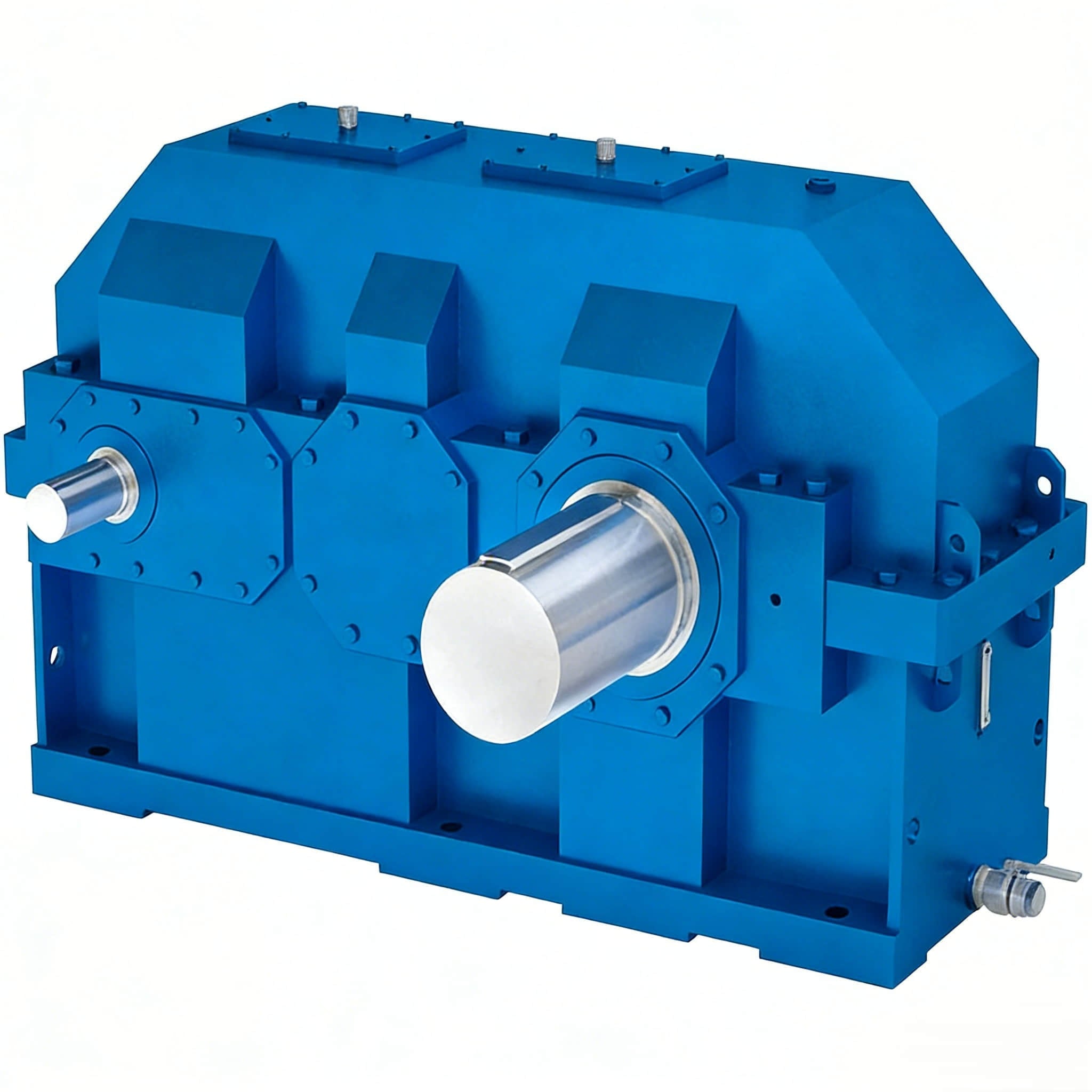
Helical Gearbox with Extended Center Distance
Quick Detail:
- Different names of the product: Helical Gearbox with Extended Center Distance, Helical Gear Reducer with Extended Center Distance
- Main application: Suitable for scenarios requiring a large transmission ratio. By increasing the gear center distance and accommodating the design of large-size gear sets, it achieves a wider range of speed reduction and torque amplification, meeting the power transmission requirements of heavy-duty equipment.
- Core specification parameters:Torque ranges from 11.6 kNm to 520 kNm, transmission ratio i = 14-250, input power ranges from 9 kW to 3948 kW, with 36 abundant specifications available for selection.
- Product Model: HK Series, e.g.: HK410HSA, helical gearbox with extended center distance, four-stage transmission, frame size 10, horizontal mounting, output: flat key solid shaft, Arrangement A
- Overview
- Recommended Products
- Hoisting Condition-Specific Design
- Advantages of Extended Center Distance
- High-Modular Architecture
- High Power Density Feature
- High-Precision Manufacturing Process
- Optimization with Finite Element Analysis (FEA)
Description:
As a dedicated transmission component focusing on the core needs of lifting scenarios, the extended center distance gearbox features three core characteristics: "stable operation, high reliability, and extended center distance". It is tailor-made to meet the special requirements of "long-span power transmission, frequent start-stop, and variable-load operation" in lifting working conditions. Its optimally designed extended center distance structure breaks through the limitation of fixed center distance of traditional gearboxes, and can flexibly adapt to the layout planning and power connection needs of different lifting machinery. With convenient and efficient installation, it requires no major modification to the main structure of the equipment. It has become a preferred transmission component for various lifting equipment such as overhead cranes, gantry cranes, port quay cranes, and tower cranes, and is widely used in lifting and related industrial scenarios including port loading and unloading, factory lifting, engineering machinery, and warehousing and logistics, providing powerful, precise and stable power transmission support for the equipment.
In terms of installation adaptability and structural advantages, relying on its core design of extended center distance, the product can easily solve the layout problem of large distance between the power source and the actuator in lifting machinery. It can achieve precise power connection without additional adapter components, greatly improving the flexibility of equipment layout. Meanwhile, it adopts standardized installation interfaces, combined with installation accessories suitable for lifting equipment, and can flexibly match the installation space, fixing methods and power connection angles of different lifting machinery. Whether it is the compact layout of small and medium-sized lifting equipment or the long-span power transmission needs of large port lifting machinery, it can be quickly integrated and commissioned, effectively shortening the equipment assembly cycle, reducing the labor and time costs of later installation and maintenance, and ensuring the efficient conduct of lifting operations.
The specification parameters cover a comprehensive range, accurately matching the power needs of full-range lifting equipment. The torque range is from 11.6kNm to 520kNm, which can easily cope with the light-load operation of small and medium-sized lifting equipment and the heavy-load lifting needs of large port lifting machinery, and resist instantaneous load fluctuations and impact loads during lifting with ease. The transmission ratio adjustment range is i=14–250, which can accurately adapt to the speed conversion and lifting speed requirements of different lifting equipment, realizing efficient power transmission and stable control of operating speed, ensuring the stability of heavy object lifting and translation processes, and avoiding the risk of heavy object shaking caused by transmission jolts. The input power covers 9kW–3948kW, offering 36 rich subdivided specification options that can be precisely matched according to parameters such as the rated lifting capacity, lifting height, and operating speed of lifting equipment.
The product has undergone multiple performance optimizations for lifting working conditions, achieving both stability and durability. The core transmission structure is made of high-strength alloy materials and manufactured with high-precision processing technology. The gear tooth surfaces are hardened, featuring uniform meshing gaps and smooth transmission without jamming. This not only improves power transmission efficiency but also effectively reduces operating noise, ensuring stable and quiet lifting operations. The housing is made of high-strength cast iron, and internal stress is eliminated through aging treatment. With high structural rigidity, it can effectively absorb vibrations generated by frequent start-stop during lifting operations, avoiding component loosening or deformation, and ensuring stable and reliable operation of the equipment under long-term frequent working conditions, thus providing solid guarantee for the safe and efficient operation of various lifting scenarios.
Applications:
Target Industries: Hoisting, Transportation, Port, Metallurgy, etc.
Applicable Equipment: Cranes, Conveyors, Stacker-Reclaimers, Loaders, Construction Winches, Port Cranes, Hoisting Equipment for Metallurgical Industry, Construction Engineering Winches, Mining Conveyors, etc.
Specifications:
| Type | Parameters |
| Torque | 11.6kNm -520kNm |
| Ratio | i=14-250 |
| Power | 9kW-3948kW |
| Mounting Methods | Horizontal mounting |
Competitive Advantage:
Adopting a proprietary design concept, the structure is optimized for the characteristics of hoisting operations such as heavy load and frequent start-stop. The gear strength and load-bearing capacity are significantly enhanced, perfectly meeting the complex requirements of hoisting working conditions.
By increasing the center distance between the input and output shafts, it provides more ample space for drum installation and improves the rope capacity of the equipment simultaneously. It meets the requirements of long-distance and heavy-load hoisting operations, expanding the application scope of the equipment.
Core components are manufactured in a standardized way with a high degree of modularization, facilitating rapid assembly and production as well as shortening delivery cycles. The high interchangeability of components enables quick replacement of faulty modules during maintenance, reducing maintenance difficulty and costs.
The product structure layout is optimized to achieve a compact design while maintaining the extended center distance. It saves equipment installation space and adapts to the compact layout requirements of hoisting equipment.
Gears are processed with precision gear grinding technology, featuring high tooth surface accuracy and low roughness. This ensures smooth meshing transmission, high transmission efficiency, stable operation with low noise, and effectively reduces wear and energy consumption.
Finite element analysis technology is applied to optimize the structure of the gearbox housing. The operational stability is improved by 30%, and the vibration and impact resistance are significantly enhanced, further ensuring operational reliability under hoisting conditions.