EN
EN



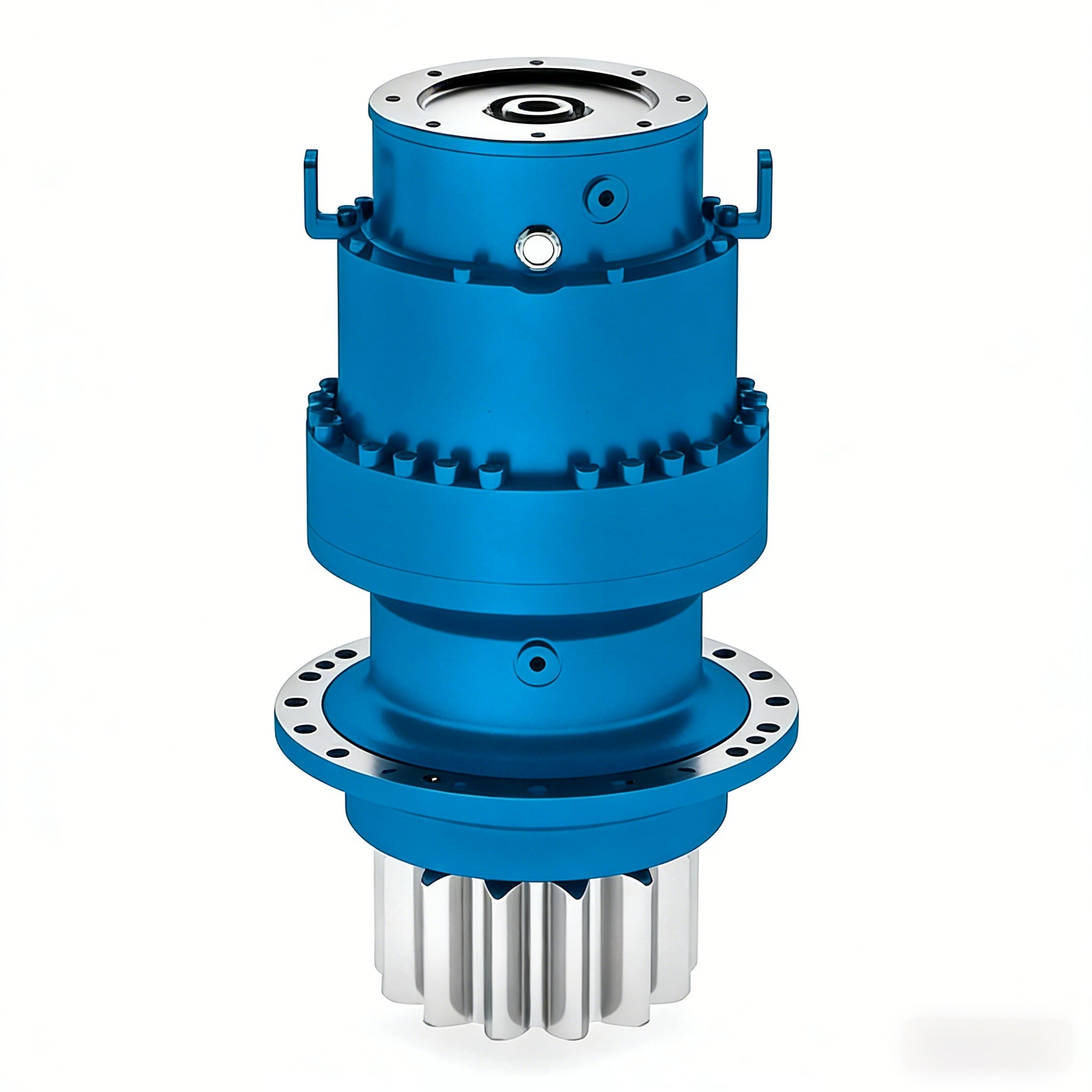
Pitch Control Gearbox
Quick Detail:
- Different names of the product: Pitch Gearbox, Pitch Reducer, Pitch Drive Gearbox, Pitch-specific Gearbox
- Main application: As the core transmission component of the pitch control system in wind turbines, it receives commands from the pitch controller to drive the blades to rotate to a specified angle, enabling precise regulation of the wind turbine's wind energy capture efficiency.
- Core specification parameters:3-5 stage gear transmission to achieve the required total transmission ratio (each stage can adopt planetary design); 3-5 planet gears arranged per stage (which can improve transmitted torque and power density).
- Product Model:/
- Overview
- Recommended Products
- Modular Design
- High-precision Manufacturing Process
- Hardened Tooth Surface Reducer Technology
- Gear Profile Modification Technology
- High Power Density
- Finite Element Optimization Design
Description:
As a core transmission component of new energy equipment such as wind turbines and photovoltaic tracking systems, the pitch gearbox is specially responsible for precisely controlling the angle of blades or the attitude adjustment of tracking devices. By real-time adapting to changes in wind speed and light angle, it maximizes the capture of wind energy and solar energy, achieving the optimal energy conversion efficiency of the entire machine. Its operation precision, stability and durability directly determine the power generation efficiency, operation and maintenance costs, and service life of new energy equipment. Widely applicable to scenarios such as onshore wind power, offshore wind power, and large-scale photovoltaic power plants, it is a key core component ensuring the efficient and stable operation of new energy projects.
The product adopts a 3-5 stage gear transmission structure, which can be flexibly configured according to the transmission ratio requirements and space constraints of different equipment. Each stage supports planetary gear design. Through the structural advantage of multi-tooth meshing, it accurately achieves the preset total transmission ratio, with transmission efficiency far exceeding that of traditional gear structures. At the same time, the torque output is uniform and stable without obvious jitter, ensuring precise and controllable angle adjustment of blades or tracking devices, and avoiding the impact on energy capture effect due to transmission deviation. Targeting the characteristics of long-term outdoor operation of new energy equipment, the transmission structure is optimized with precise gap control, which can effectively resist performance degradation caused by temperature difference changes and humidity fluctuations, adapting to complex outdoor working conditions.
The core gear material is high-quality alloy steel subjected to strict heat treatment. The precision forging process improves material density and overall strength, eliminating internal impurities and pores. After deep carburizing and quenching treatment, the tooth surface hardness reaches a high strength level while retaining excellent core toughness, forming the characteristic of "hard tooth surface and tough core". It can easily withstand alternating loads and instantaneous impact loads when wind turbine blades are exposed to wind, as well as fatigue loss caused by frequent start-stop of photovoltaic tracking systems, greatly reducing the risk of gear wear and fracture.
The housing is made of high-strength ductile iron or high-quality structural steel. Optimized for mechanical structure and precision machined, it has excellent structural rigidity and vibration damping performance, which can effectively absorb high-frequency vibrations generated during equipment operation, weaken vibration transmission, and reduce operating noise, adapting to the low-noise operation requirements of wind power and photovoltaic scenarios. The bearing system is precisely configured according to different working conditions, and can select ball bearings, roller bearings or full-complement roller bearings. Among them, full-complement roller bearings are optimized for heavy-load working conditions with stronger load-bearing capacity, ensuring the maximum transmission efficiency of the gearbox under different load and speed conditions. It provides core support for the precise control and stable operation of the pitch system, guaranteeing the long-term continuous operation of new energy equipment.
Applications:
Target Industries: Wind Power, Photovoltaic, Industry, Aerospace, etc.
Applicable Equipment: Wind Turbines, Large-scale Photovoltaic Tracking Systems, Large Industrial Fans, etc.
Specifications:
| Type | Parameters |
| Number of Transmission Stages | 3–5 stages |
| Number of Planet Gears per Stage | 3–5 units |
| Mounting Methods | Flange Mounting |
Competitive Advantage:
Core components are manufactured in a standardized way with high interchangeability. Faulty modules can be replaced quickly during maintenance, making it particularly suitable for the maintenance of high-altitude operation equipment such as wind turbines.
Gears are processed by internationally advanced precision gear grinding equipment, reaching high industry standards for gear accuracy. Smooth meshing transmission ensures precise control and rapid response of the pitch control system.
Gears undergo multiple processes including forging, carburizing and quenching, and precision grinding. The high hardness and wear resistance of the gear surface ensure a long service life, adapting to the frequent start-stop characteristics of the pitch control system.
Optimizes the gear meshing state, improves product load-bearing capacity, reduces operating noise, and ensures the stability and reliability of the product during long-term use.
Adopts a compact planetary gear transmission structure, optimizes gear layout and housing design, realizes high power output within a limited volume, effectively saves installation space, and adapts to the compact installation environments such as wind turbine nacelles and photovoltaic tracking systems.
Uses finite element analysis (FEA) technology to optimize the design of key structures such as the housing and planet carrier, enhances structural rigidity and fatigue resistance, and improves product operational stability.