1. Heavy-Duty Drive Failure
Symptoms: Tooth surface pitting fatigue, spalling, tooth breakage, rapid wear; insufficient accuracy of large-module gears causing high meshing impact.
Data Impact: Average replacement cycle of 18 months (extreme cases < 12 months), annual downtime for maintenance exceeds 72 hours, production capacity loss exceeds 20%.
Scenario: 24/7 operation in mines, with annual losses exceeding one million yuan per unit.
2. Thermal Management Failure
Symptoms: Continuous heavy load causes oil temperature to spike (≥80°C), leading to oil film rupture and seal aging; inefficient heat dissipation structure.
Data Impact: Drive efficiency drops below 85%, oil leakage worsens, forced shutdowns for cooling, energy consumption increases by 12%.
Scenario: Grinding metallurgical sinter ore, high ambient temperature + heavy dust, leading to tooth surface softening and frequent pitting.
3. Seal and Lubrication Failure
Symptoms: Leakage at shaft extensions / joint surfaces, dust ingress into gearbox, lubricant contamination; poor adaptation of lubrication method.
Data Impact: Maintenance required 1-2 times per month, high cost of oil/seal changes, environmental pollution, accelerated wear.
Scenario: Cement/mining dust concentration ≥10mg/m³, standard seals fail easily, poor lubrication exacerbates wear.
4. Vibration, Noise, and Installation Issues
Symptoms: Low gear precision (ISO Grade 7 and below), coaxiality deviation, insufficient housing rigidity; long installation and commissioning cycles.
Data Impact: Drive efficiency drops by 3%-5%, accelerated structural fatigue, frequent repairs, high labor costs.
Scenario: Poor fit after gear replacement, abnormal noise/jamming, requiring repeated adjustments, impacting production capacity.
5. Start-up and Variable Load Impact
Symptoms: Insufficient torque under heavy-load start-up, high impact, grid fluctuation; low efficiency under variable load conditions.
Data Impact: High motor starting current, impact on power grid, shortened drive train lifespan, high energy consumption.
Scenario: Traditional "motor + gearbox + pinion" structure prone to slipping and high vibration under variable loads.
6. Insufficient Adaptability and Standardization
Symptoms: Many non-standard designs, non-interchangeable spare parts; weak customization capabilities, difficulty adapting to different ball mill models.
Data Impact: Failure of one part requires full unit inspection, high inventory costs, fault handling cycle up to 72 hours in remote areas.
Scenario: 40% of gears for Φ5.5m+ super-large ball mills are imported, difficult to adapt with domestic alternatives.
7. Energy Efficiency and Lightweight Shortcomings
Symptoms: Long drive train (multi-stage gears) leading to high energy loss; large volume, heavy weight, limited installation space.
Data Impact: Low overall energy efficiency, non-compliant with energy-saving requirements, high installation/hoisting costs.
Scenario: Traditional drive systems have energy loss 15%, urgent need for lightweight retrofitting.
8. Material and Process Bottlenecks
Symptoms: Low self-sufficiency rate (approx. 55%) for high-end gear steel (oxygen content ≤12ppm), inconsistent heat treatment quality.
Data Impact: Proportion of high value-added products is less than 12% (vs. 67% in Germany), high quality fluctuation, low first-pass yield (89.7% for small/medium factories vs. 98.2% for industry leaders).
Scenario: Gears for super-large ball mills rely on imports (Renk/IHI), long procurement cycles, high costs.
Pain Point Solutions
1. Heavy-Duty Drive Failure (Tooth Breakage/Wear)
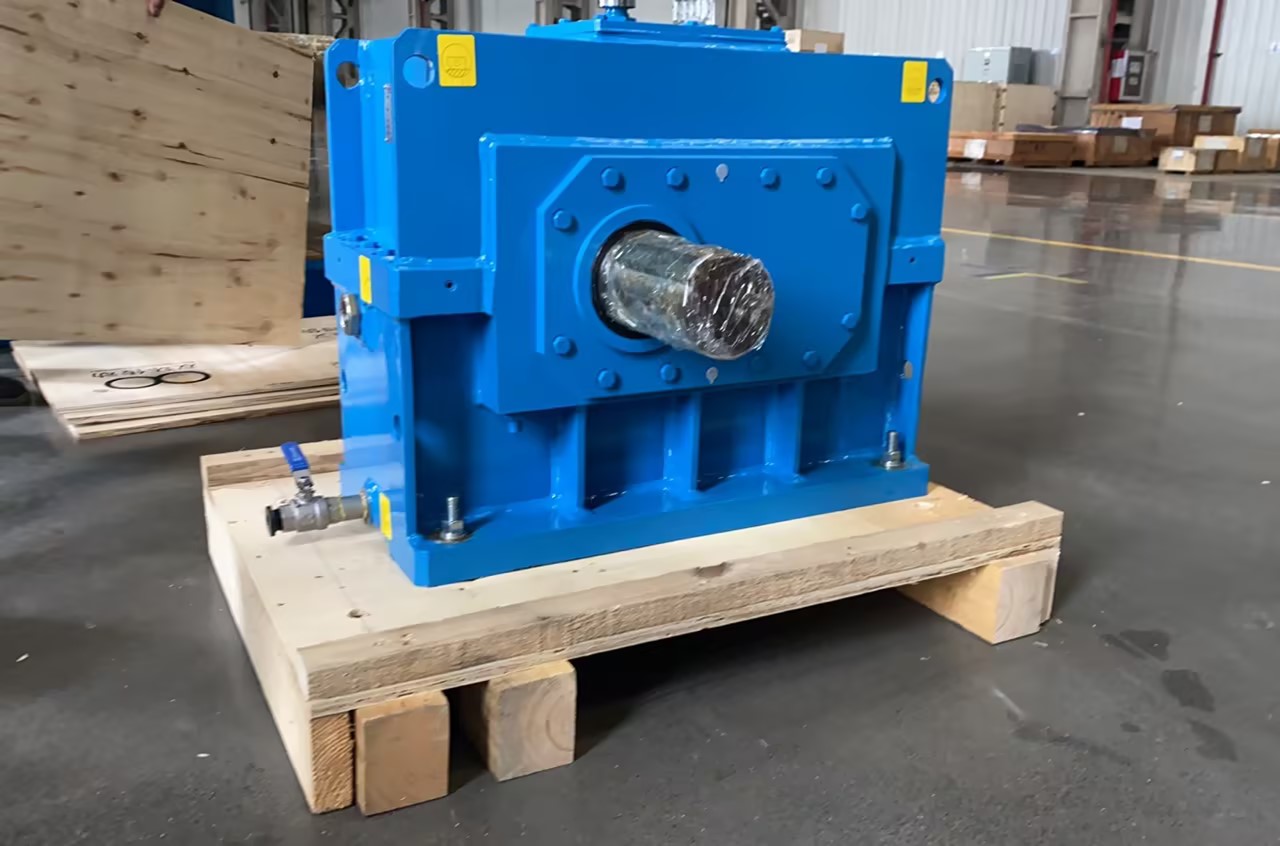
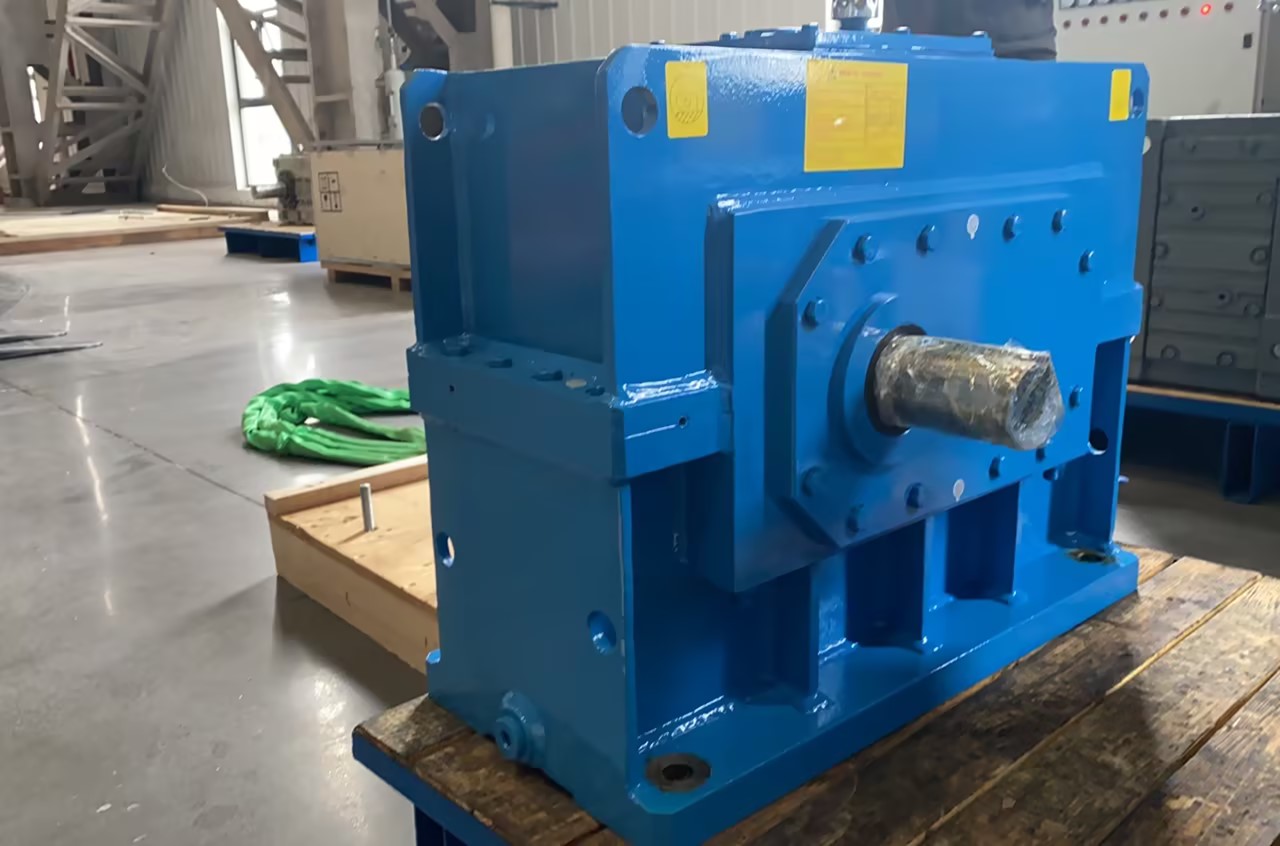
Solution: Utilizes ISO Grade 5 high-precision heavy-duty gears, deep carburizing and quenching process, optimized tooth crowning modification.
Result: Service life extended by ≥30%, annual downtime losses reduced by 80%.
2. Thermal Management Failure (High Oil Temperature/Downtime)
Solution: Optimized housing flow channels and cooling ribs, standard inclusion of dedicated heavy-duty gear oil, optional forced lubrication/cooling system.
Result: Stable oil temperature, drive efficiency increased to over 90%, energy consumption reduced by 12%.
3. Seal and Lubrication Failure (Oil Leakage/Contamination)
Solution: Multi-stage compound seal + labyrinth structure, high-precision housing joint surfaces, long-life lubrication design.
Result: Leakage eliminated, zero dust ingress, maintenance frequency reduced by 50%.
4. Vibration, Noise, and Installation Issues
Solution: High-rigidity housing, precision assembly, modular mounting interfaces, optimized gear meshing.
Result: Vibration and noise levels exceed industry standards, installation and commissioning time shortened by 60%.
5. Start-up and Variable Load Impact
Solution: Flexible damping design, optimized matching with the drive system, enhanced impact resistance.
Result: Smooth start/stop, minimal grid impact, extended drive train lifespan.
6. Insufficient Adaptability and Standardization
Solution: Modular and standardized core components, full series coverage, support for rapid customization.
Result: Interchangeable spare parts, inventory cost reduced by 40%, after-sales response time < 48 hours.
7. Energy Efficiency and Lightweight Shortcomings
Solution: High power density compact design, optimized drive train, lightweight housing.
Result: Overall energy efficiency increased by 5%, installation space saved, more energy-efficient.
8. Material and Process Bottlenecks
Solution: Utilization of high-end gear steel, advanced heat treatment processes, full-process quality control.
Result: Stable product quality, first-pass yield 98%, a viable alternative to imports.

 EN
EN