
 EN
EN



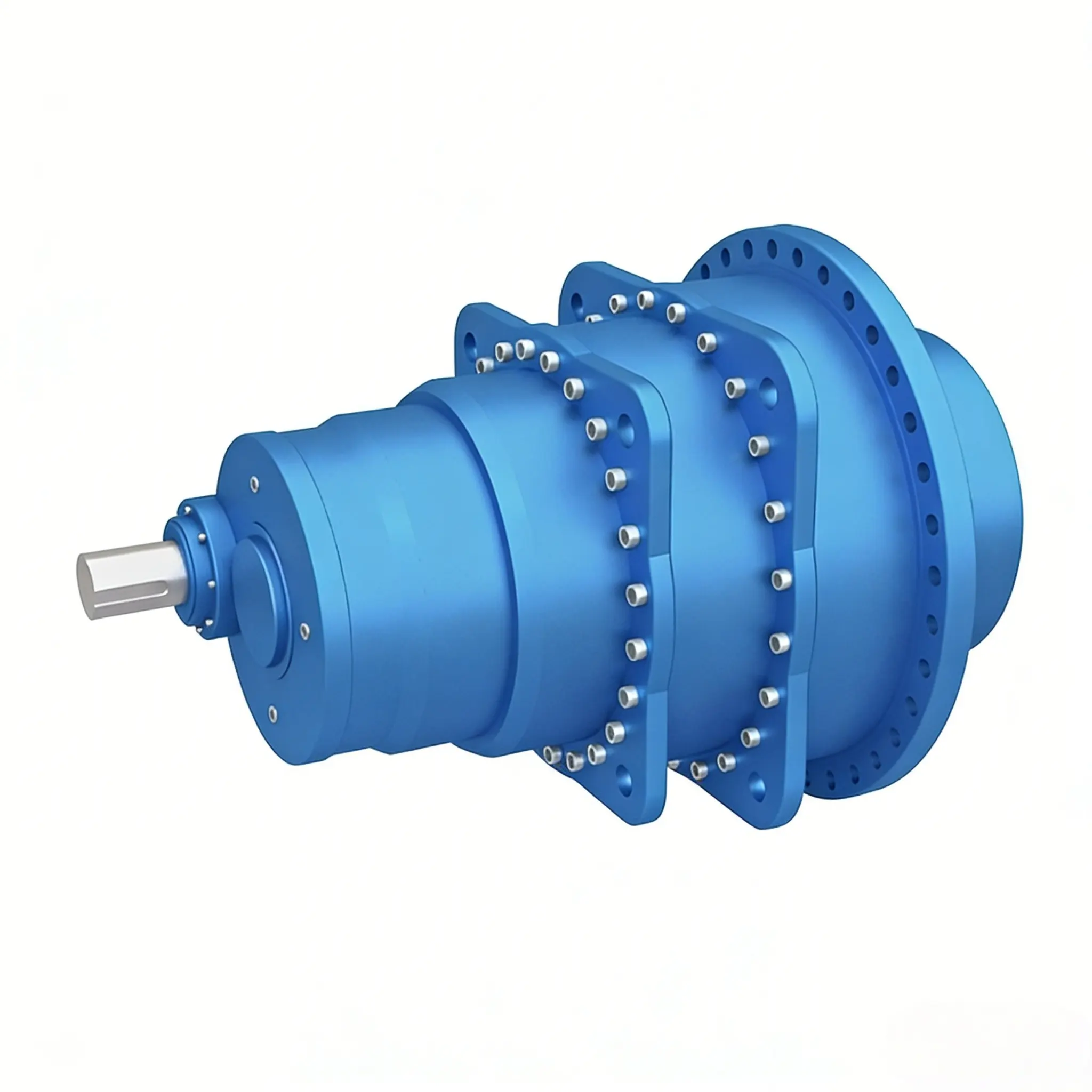
Precision drive systems demand exceptional accuracy, reliability, and consistent performance across various industrial applications. When engineers design motion control systems for robotics, aerospace, medical devices, and advanced manufacturing equipment, they consistently turn to one specific type of transmission technology that delivers superior performance characteristics. The planetary gearbox has emerged as the preferred solution for precision drive applications due to its unique mechanical advantages and exceptional capability to maintain tight tolerances under demanding operational conditions.
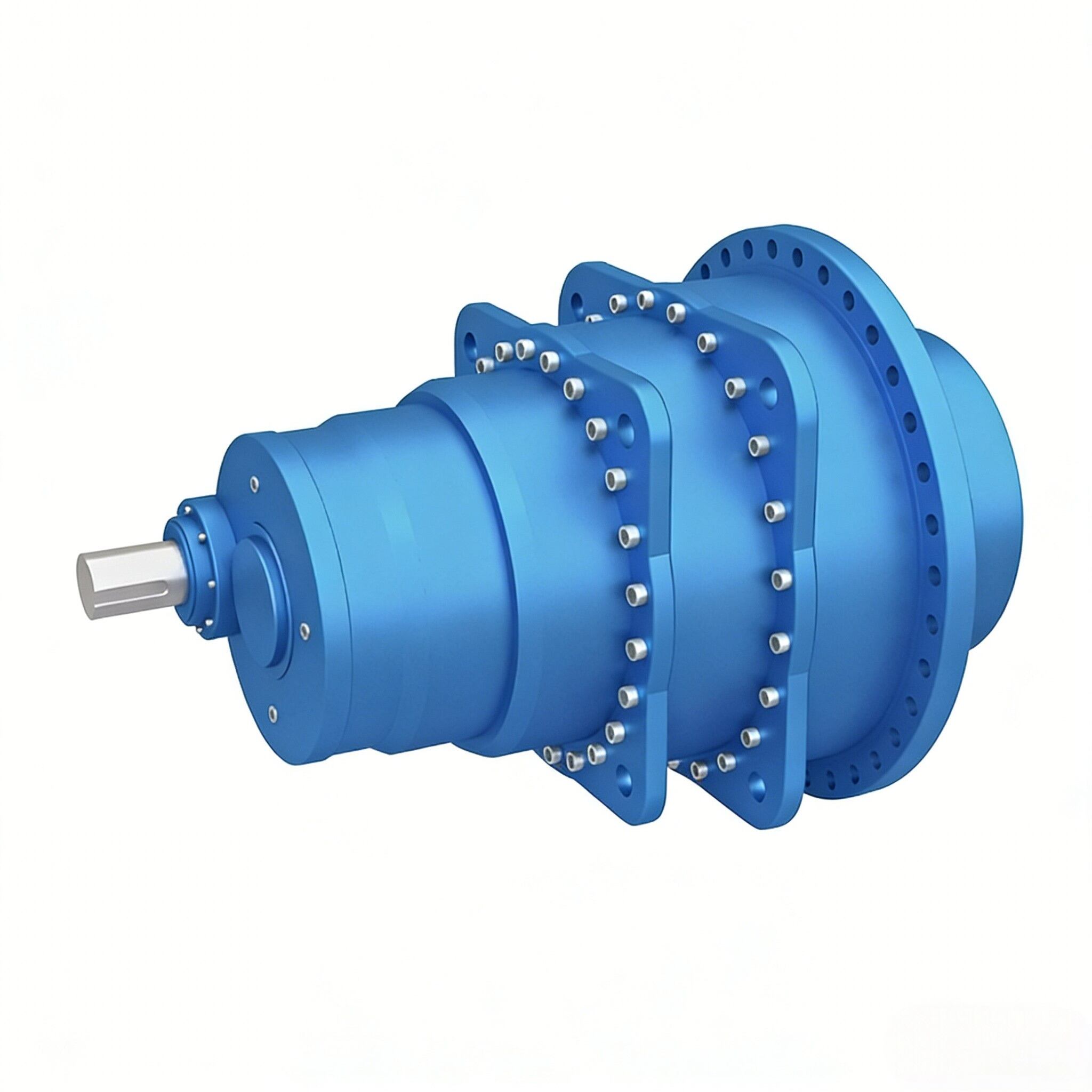
The fundamental reason why precision drive systems utilize planetary gearbox technology lies in their ability to provide multiple critical performance benefits simultaneously. Unlike traditional gear arrangements, the planetary configuration distributes load forces across multiple gear teeth, resulting in enhanced torque density, reduced backlash, and improved positional accuracy. These characteristics make the planetary gearbox an indispensable component in applications where even minor deviations from intended motion parameters can compromise system performance or product quality.
Superior Load Distribution and Torque Handling Capabilities
Multi-Path Load Distribution Mechanism
The primary advantage that makes planetary gearbox systems ideal for precision applications stems from their unique load distribution architecture. In a planetary configuration, multiple planet gears simultaneously engage with both the sun gear and ring gear, creating several parallel load paths. This multi-path design distributes the transmitted torque across three to six planet gears, depending on the specific planetary gearbox configuration, rather than concentrating all forces on a single gear mesh point as occurs in conventional gear trains.
This distributed loading approach significantly reduces the stress concentration on individual gear teeth, allowing the planetary gearbox to handle substantially higher torque loads while maintaining precise motion control. The multiple engagement points create redundancy that enhances system reliability, as the failure of a single planet gear does not immediately compromise the entire transmission system. For precision drive applications requiring both high torque capacity and accurate positioning, this load distribution characteristic of the planetary gearbox provides an optimal balance of strength and precision.
The even distribution of forces also minimizes gear tooth deflection under load, which is critical for maintaining consistent gear mesh relationships and preserving the accuracy of the transmission ratio. This characteristic ensures that the planetary gearbox maintains its precision characteristics even when operating at maximum rated torque levels, making it suitable for demanding industrial applications where both power and precision are essential requirements.
Enhanced Torque Density Performance
Precision drive systems often operate within space-constrained environments where maximizing power transmission capability within a compact footprint becomes crucial. The planetary gearbox excels in these scenarios by delivering exceptional torque density, typically achieving torque-to-weight ratios that are three to five times higher than equivalent helical or spur gear reducers. This superior torque density results from the concurrent engagement of multiple planet gears, effectively multiplying the torque handling capacity without proportionally increasing the overall gearbox size or weight.
The compact design of a planetary gearbox enables precision drive system designers to achieve higher performance levels while minimizing the mechanical footprint of the transmission components. This space efficiency becomes particularly valuable in applications such as robotic joints, medical device actuators, and aerospace mechanisms where every gram of weight and cubic centimeter of space must be optimized for maximum functional benefit. The high torque density also reduces the need for additional gear reduction stages, simplifying the overall drive train architecture and improving system reliability.
Exceptional Accuracy and Repeatability Characteristics
Minimal Backlash Performance
Backlash represents one of the most critical parameters in precision drive system performance, as it directly affects positioning accuracy, repeatability, and system response characteristics. The planetary gearbox design inherently provides superior backlash performance compared to conventional gear arrangements due to its symmetrical gear engagement pattern and the ability to implement precision manufacturing tolerances across multiple gear mesh interfaces simultaneously.
In a properly designed planetary gearbox, the radial forces generated by the multiple planet gears tend to self-center the sun gear and maintain consistent gear mesh contact patterns. This self-centering effect, combined with precise manufacturing tolerances, enables planetary gearbox units to achieve backlash values as low as 1-3 arc-minutes, which is significantly better than the 5-15 arc-minute backlash typically found in conventional gear reducers. For precision positioning applications requiring sub-millimeter accuracy or precise angular positioning, this minimal backlash characteristic is essential for achieving the required performance specifications.
The consistent engagement pattern of a planetary gearbox also ensures that backlash remains stable throughout the operational life of the transmission system. Unlike conventional gear trains where backlash tends to increase due to wear patterns concentrated on specific gear teeth, the distributed loading in planetary gearbox systems promotes even wear distribution, maintaining consistent backlash characteristics over extended operational periods.
High Positional Accuracy and Repeatability
Precision drive systems require transmission components that can consistently deliver accurate positioning commands without introducing systematic errors or random variations. The planetary gearbox configuration provides exceptional positional accuracy due to its inherent mechanical stability and the precise manufacturing tolerances achievable in modern planetary gear production processes. The symmetrical arrangement of planet gears creates a mechanically balanced system that minimizes vibrations and eliminates the lateral forces that can compromise positioning accuracy in other gear arrangements.
The repeatability characteristics of a planetary gearbox are particularly important in applications such as CNC machine tools, semiconductor manufacturing equipment, and precision assembly systems. These applications require the transmission system to return to exactly the same position repeatedly, often with tolerances measured in micrometers. The stable gear mesh relationships and minimal deflection characteristics of planetary gearbox systems enable them to achieve positioning repeatability values of ±2-5 micrometers, making them suitable for the most demanding precision applications.
Furthermore, the thermal stability of planetary gearbox systems contributes to their excellent repeatability performance. The symmetrical design distributes thermal expansion forces evenly, preventing thermal distortions that could affect gear mesh relationships and compromise positional accuracy as operating temperatures fluctuate during normal system operation.
Optimal Speed Reduction and Control Characteristics
Efficient High Ratio Speed Reduction
Many precision drive applications require significant speed reduction to convert high-speed motor output into the low-speed, high-torque motion needed for precise positioning and controlled movement. The planetary gearbox provides an ideal solution for achieving high reduction ratios efficiently within a single transmission stage. Single-stage planetary gearbox units can typically achieve reduction ratios ranging from 3:1 to 10:1, while multi-stage configurations can provide ratios exceeding 1000:1 while maintaining high efficiency and precision characteristics.
The efficiency of speed reduction in planetary gearbox systems results from the multiple power paths that share the transmitted load. This distributed power transmission approach minimizes sliding friction and rolling losses compared to conventional gear trains where all power must flow through a single gear mesh interface. Typical planetary gearbox efficiency levels range from 95-98% per stage, ensuring that minimal energy is lost during the speed reduction process and reducing heat generation that could affect precision performance.
The ability to achieve high reduction ratios in a compact planetary gearbox configuration eliminates the need for multiple reduction stages or additional transmission components. This simplification reduces the overall system complexity, improves reliability, and minimizes the cumulative backlash and accuracy degradation that would result from connecting multiple gear reduction stages in series.
Smooth Motion Control and Dynamic Response
Precision drive systems require smooth, consistent motion characteristics without velocity ripple or torque fluctuations that could compromise process quality or system performance. The planetary gearbox configuration provides exceptional motion smoothness due to the continuous engagement of multiple planet gears and the balanced mechanical arrangement that eliminates the periodic variations associated with conventional gear mesh patterns.
The dynamic response characteristics of a planetary gearbox make it particularly suitable for applications requiring rapid acceleration and deceleration cycles. The low inertia of individual planet gears and the balanced rotational masses enable the system to respond quickly to speed and direction changes without introducing mechanical resonances or vibrations. This rapid response capability is essential in applications such as pick-and-place robotics, high-speed packaging equipment, and precision machining centers where cycle times directly impact productivity.
The inherent mechanical stiffness of planetary gearbox systems also contributes to their excellent dynamic performance. The multiple gear mesh interfaces and the rigid carrier structure create a transmission system with high torsional stiffness, ensuring that the output motion accurately follows input commands without elastic deflection or mechanical lag that could compromise precision performance during dynamic operations.
Industrial Application Requirements and System Integration
Demanding Environmental Performance
Precision drive systems often operate in challenging environmental conditions that require transmission components capable of maintaining their performance characteristics despite exposure to temperature variations, vibrations, contaminants, and other adverse conditions. The robust construction and balanced design of planetary gearbox systems make them well-suited for these demanding applications where reliability and consistent performance are critical requirements.
The enclosed design of most planetary gearbox units provides excellent protection against dust, moisture, and other environmental contaminants that could compromise gear mesh quality or cause premature wear. The multiple gear mesh interfaces distribute wear patterns evenly, extending operational life even in applications with high duty cycles or exposure to particulate contamination. This environmental resilience makes planetary gearbox technology particularly valuable in manufacturing environments, outdoor applications, and other settings where conventional transmission systems might experience rapid performance degradation.
Temperature stability represents another critical advantage of planetary gearbox systems in precision applications. The balanced thermal expansion characteristics and symmetrical design minimize thermal distortions that could affect gear mesh relationships or compromise positional accuracy as operating temperatures fluctuate. This thermal stability ensures that the planetary gearbox maintains its precision characteristics throughout its operational temperature range, typically spanning -40°C to +120°C depending on specific design requirements and lubrication systems.
Versatile Integration and Mounting Options
The compact, symmetrical design of planetary gearbox systems provides exceptional flexibility for integration into various precision drive system architectures. The concentric input and output shaft arrangement eliminates the offset mounting requirements associated with parallel shaft gear reducers, enabling more compact and balanced mechanical designs. This coaxial configuration is particularly beneficial in applications such as robotic joints, rotary tables, and direct-drive systems where maintaining precise alignment and minimizing mechanical complexity are important design objectives.
Modern planetary gearbox designs offer multiple mounting configurations and interface options to accommodate different installation requirements and space constraints. Flange mounting, foot mounting, and hollow shaft configurations provide design engineers with the flexibility to optimize system packaging while maintaining the precision performance characteristics required for demanding applications. The standardized mounting interfaces and industry-standard shaft dimensions facilitate easy integration with existing motor and equipment designs.
The modular nature of planetary gearbox systems also enables engineers to select specific performance characteristics by choosing appropriate gear ratios, output configurations, and accessory options without requiring custom transmission designs. This modularity reduces development time, simplifies spare parts inventory, and provides consistent performance characteristics across different applications within a precision drive system family.
FAQ
What makes planetary gearboxes more precise than other gear types?
Planetary gearboxes achieve superior precision through their multi-path load distribution design, which engages multiple planet gears simultaneously with both sun and ring gears. This arrangement creates balanced radial forces that naturally center the gear train, minimizing backlash to 1-3 arc-minutes compared to 5-15 arc-minutes in conventional reducers. The symmetrical configuration also distributes wear evenly across all gear teeth, maintaining consistent accuracy throughout the operational life of the gearbox.
How do planetary gearboxes handle high torque while maintaining accuracy?
The planetary design distributes transmitted torque across multiple planet gears rather than concentrating all forces on a single mesh point. This load sharing allows planetary gearboxes to handle 3-5 times more torque than equivalent-sized conventional gear reducers while experiencing lower stress concentrations on individual teeth. The reduced tooth deflection under load preserves gear mesh relationships and maintains transmission accuracy even at maximum rated torque levels.
What reduction ratios are possible with planetary gearboxes in precision systems?
Single-stage planetary gearboxes typically provide reduction ratios from 3:1 to 10:1, while multi-stage configurations can achieve ratios exceeding 1000:1. The ability to obtain high ratios in compact configurations eliminates the need for multiple reduction stages, reducing cumulative backlash and accuracy degradation. Most precision applications utilize ratios between 10:1 and 100:1 to balance torque multiplication with speed control requirements.
Why are planetary gearboxes preferred over worm gears for precision applications?
While worm gears can provide high reduction ratios, planetary gearboxes offer superior efficiency (95-98% vs 70-90%), much lower backlash, better bidirectional accuracy, and faster dynamic response. Planetary designs eliminate the sliding friction inherent in worm gear systems, reducing heat generation and improving positional repeatability. The balanced rotational masses in planetary systems also provide smoother motion control without the stick-slip behavior that can affect precision in worm gear applications.
Table of Contents
- Superior Load Distribution and Torque Handling Capabilities
- Exceptional Accuracy and Repeatability Characteristics
- Optimal Speed Reduction and Control Characteristics
- Industrial Application Requirements and System Integration
-
FAQ
- What makes planetary gearboxes more precise than other gear types?
- How do planetary gearboxes handle high torque while maintaining accuracy?
- What reduction ratios are possible with planetary gearboxes in precision systems?
- Why are planetary gearboxes preferred over worm gears for precision applications?